




Workshop: Managing Piping Loads on Pumps: A Detailed Review
-
 Thursday 19 Nov 2026
(3-5pm CET)
Thursday 19 Nov 2026
(3-5pm CET)
-
 2 Hour Session
-
Interactive Q&A
-
Trusted by Professionals
-
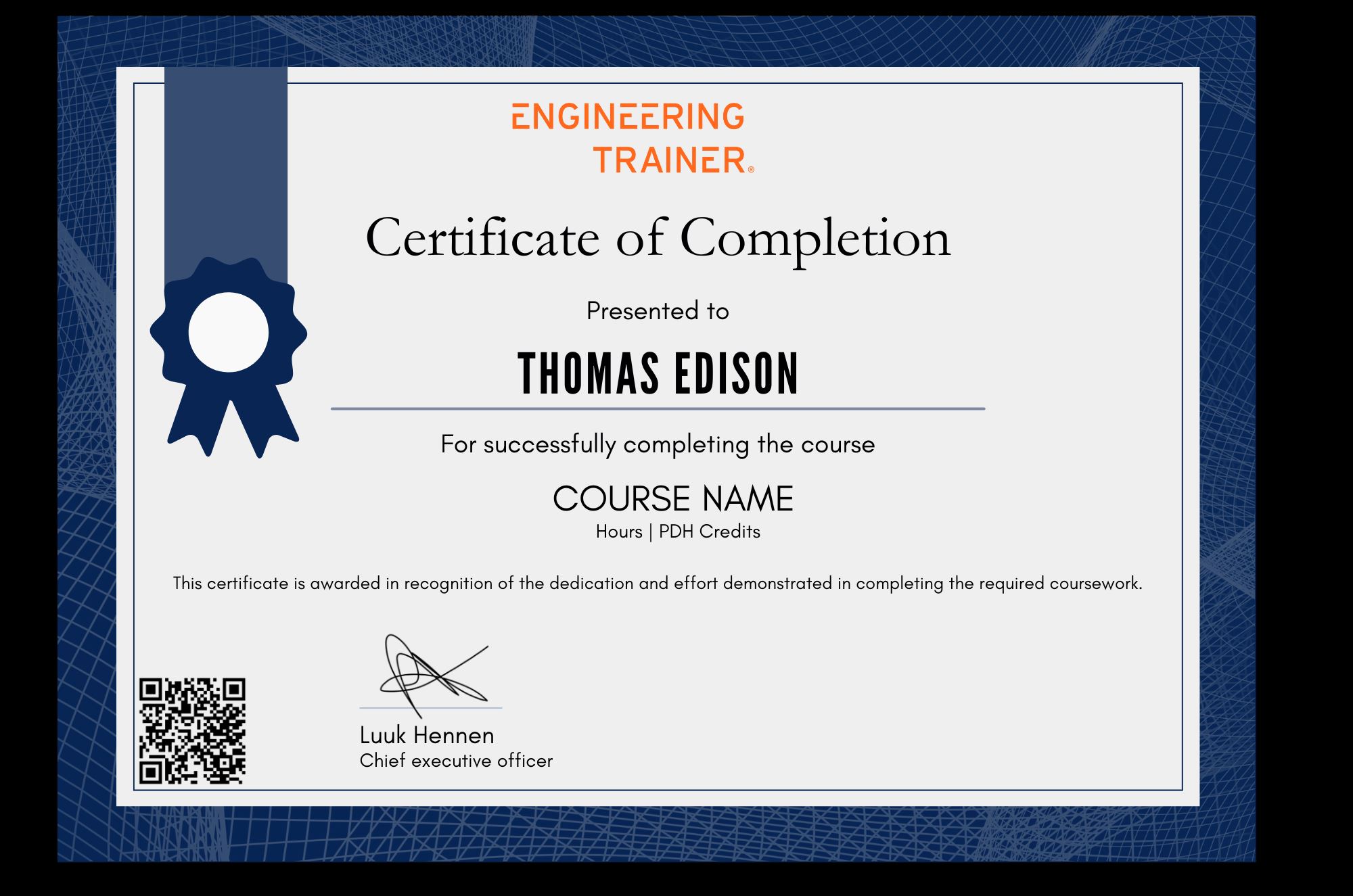
Certification Included
Why take this course?
Managing the loads imposed by piping on pumps is a recurring challenge in piping layout and flexibility analysis. In this live workshop, experienced industry specialist Zdravko Ivancic reviews real project designs to explain how piping geometry, flexibility and support arrangements influence pump nozzle loads, and how practical design decisions can be used to achieve acceptable loads without unnecessarily complicating the piping system or design process.

What you'll learn
After this live Workshop you,
• understand why piping loads on pump nozzles require particular attention during piping layout and flexibility analysis;
• understand how piping forces and moments can affect pump casing deformation, alignment and equipment reliability;
• understand how piping geometry, thermal expansion, stiffness and support arrangements influence the loads transferred to pump nozzles;
• understand the relevant API 610 nozzle-load criteria and how the more detailed compliance checks in Annex F are applied;
• understand why exceeding an individual basic nozzle-load value does not necessarily mean that the complete API 610 assessment fails;
• are better equipped to interpret and discuss pump-vendor allowable loads and overly conservative load requirements;
• understand how changes to routing, guides, restraints, support locations and support types can be used to reduce pump nozzle loads;
• understand how solving a pump-load problem can affect piping stresses, support loads, movements and other parts of the flexibility analysis;
• understand when expansion joints may help manage pump loads and which additional design considerations they introduce;
• have seen several real-life pump-piping arrangements and understand the advantages and disadvantages behind different design solutions;
• have worked through load checks and practical design examples with the instructor.
-
 Thursday 19 Nov 2026
(3-5pm CET)
Thursday 19 Nov 2026
(3-5pm CET)
-
 Instructor-Led 2hr Duration
-
 Online Live Session
About the course
Piping connected to pumps is often one of the more challenging areas of a piping flexibility analysis. Pumps can generally tolerate only limited external forces and moments at their nozzles, while the connected piping still needs to accommodate thermal expansion, weight, imposed movements and other loading conditions.
Excessive piping loads can contribute to pump casing deformation and alignment problems, potentially affecting the reliability of bearings, seals, shafts and internal pump clearances. At the same time, simply requesting the piping engineer to reduce every load further is not necessarily a practical design approach. The piping system still needs sufficient flexibility, suitable support and restraint, constructability and reliable operation.
During this 2-hour instructor-led workshop, Zdravko Ivancic approaches the subject from the piping professional's perspective. Using real project designs, he will explain how different piping layouts and support arrangements influence the forces and moments transferred to pump nozzles, why certain arrangements work better than others, and how experienced engineers iterate the design when calculated loads are too high.
API 610 will be discussed as an important reference for pump nozzle-load acceptance, including the detailed compliance checks provided in Annex F. The workshop will also address the practical interaction between piping engineers, rotating-equipment engineers, project teams and pump vendors when allowable loads become a point of discussion.
Different design philosofies for reducing pump loads will be reviewed, including changes to piping routing, flexibility, guides, restraints and support locations. Expansion joints will also be discussed where relevant, including situations where they can provide an effective solution and situations where they introduce additional design considerations.
Through worked calculations and several real-life piping arrangements, participants will see how changes to the piping and support design influence pump loads and what advantages and disadvantages different solutions introduce elsewhere in the system.
-
Live Workshop

-
Thursday 19 Nov 2026 (3-5pm CET)
-
2 PDH Credits

-
English

-
MAS1404

Meet your instructor
Zdravko Ivancic, M.Eng.
Zdravko Ivancic is a stress-analysis engineer with more than 20 years of experience in pipe stress and flexibility analysis, pipe-support design and FEA for process and power-plant systems. He is an expert in ASME B31.1, ASME B31.3, EN 13480 and ASME BPVC Section VIII, Division 2.


Who should attend this course
Pipe Stress Engineers, Piping Engineers and Piping Designers involved in the layout, flexibility analysis or support design of piping connected to pumps.Lead Piping Engineers, Mechanical Engineers and Rotating Equipment Engineers involved in reviewing pump nozzle loads or coordinating piping and equipment requirements during engineering projects.
Prerequisites
Participants should be familiar with piping flexibility analysis and the basic principles of pipe stress engineering. Familiarity with piping forces and moments, thermal expansion and common pipe-support functions is assumed.Certification
Related courses



Why choose EngineeringTrainer
-
Live Interaction with Experts
-
Advance Technical Competences
-
Courses by Industry Authorities
Since using EngineeringTrainer our internal mentorship has a much more matured character.
Logan Chapman - COO at Chapman Consulting Inc.
Request a Quote
Train Smarter. Grow Faster.
Build real-world skills that help you make better engineering decisions, reduce errors, and stand out in your field.