




Pulsation & Vibration theory for Reciprocating Compressors
-
 2hr 30min
-
 Self paced
-
Trusted by professionals
-
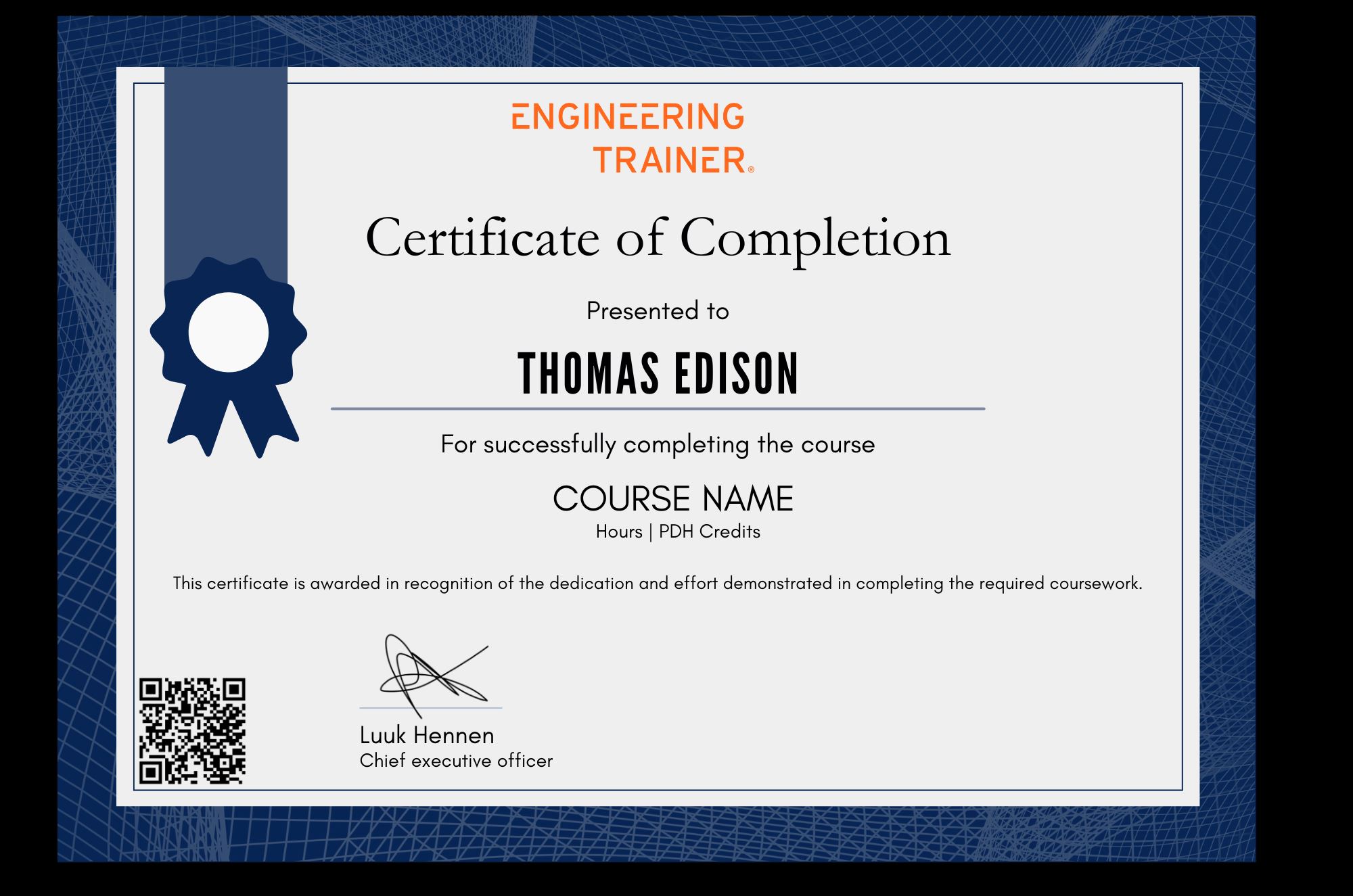
Certification included
-
Industry standard content
Why take this course?
This reciprocating-compressor course explains how pressure pulsations excite piping and how that excitation can lead to mechanical vibration. API 618 concepts, BOSpulse demonstrations and field cases connect the theory with compressor-station assessment and mitigation decisions. This self-paced online course includes video lectures and a completion certificate with PDH credits.

What you'll learn
After completing this course, you...
• understand what pressure pulsations due to reciprocating compressors are and what consequences they can have,
• are familiar with calculation methods for analyzing pressure pulsations,
• know the basics of performing API 618 pulsation analysis,
• have an understanding of assessing associated vibrations,
• know what mitigation measures are available and when they are applicable,
• have seen several real-life cases (2 in much detail).
-
 1-year access
-
 By Industry Experts
-
 100% Online Course
About the course
This course teaches you fundamental knowledge and understanding of pressure pulsations in piping due to reciprocating compressors in the context of API 618 analyses.
By means of several real-life case studies you are taught the details of how pulsations are caused by compressors and what their consequences can be. Associated assessment methods such as pulsation analysis using software are discussed by the instructor as well as conformity checks for the pulsations and resulting vibrations. Possible mitigation measures and good design practices are provided.
Discussions and analyses will be illustrated using the software BOSpulse. No knowledge of this software is required.
-
Self-Paced Course

-
2hr 30min
-
2.5 PDH Credits

-
English

-
SPC128

Meet your instructor
Dynaflow Research Group
Dynaflow Research Group is an engineering consultancy working across piping design and analysis, flow dynamics, vibration, FRP piping, pressure equipment and specialist engineering software. Its experience includes EN and ASME design rules for piping and pressure vessels, buried piping, water hammer, pulsation, dynamic stress assessment, vibration measurement, FEA tools, BOSfluids, BOSpulse, PV Elite and NozzlePRO workflows.
Who should attend this course
• Piping engineers working with reciprocating-compressor systems• Pipe stress engineers assessing vibration-prone piping
• Pulsation engineers applying API 618
• Mechanical engineers responsible for reciprocating compressors
• Rotating-equipment engineers reviewing compressor-piping interactions
Program & Details
-
Pulsation & Vibration Theory for Reciprocating Compressors

1. Pressure pulsations Foundations - Part 1
2. Pressure pulsations Foundations - Part 2
3. Shaking forces due to pulsations
4. Periodic excitations in piping systems
5. Pulsation control in piping systems
6. Acoustic resonance in piping systems
7. Acoustic resonance typical problematic modes
8. Orifice plates to change modes
9. General considerations for piping systems
10. Recap of Module 1 -
Field Case - Compressor Station
1. Case Introduction
2. Operating modes
3. Result discussion
4. Damper design -
Understanding Mechanical Vibrations due to Pulsation
1. Vibration risks in piping systems
2. Types of vibrations in piping systems
3. Mechanical excitation due excitation source
4. Single DOF systems Degree Of Freedom
5. Mechanical response to pressure pulsations
6. Mechanical eigenmodes in piping systems
7. Evaluating vibration in piping systems
8. Mechanical response versus acoustic response -
Field Case - Pipe Vibrations
1. Case Introduction
2. Compressor harmonics
3. Mechanical resonance
4. System modifications
5. Conclusions
Certification
Related courses

Why choose EngineeringTrainer
-
Unlimited Team-wide Access
-
Advance Technical Competences
-
Courses by Industry Authorities
Since using EngineeringTrainer our internal mentorship has a much more matured character.
Logan Chapman - COO at Chapman Consulting Inc.
Request a Quote
Train Smarter. Grow Faster.
Build real-world skills that help you make better engineering decisions, reduce errors, and stand out in your field.