




Working with ASME VIII-2 Part 5: “Design by Analysis”
-
 3hr
3hr
-
 Self paced
-
Trusted by professionals
-
Certification included
-
Industry standard content
Why take this course?
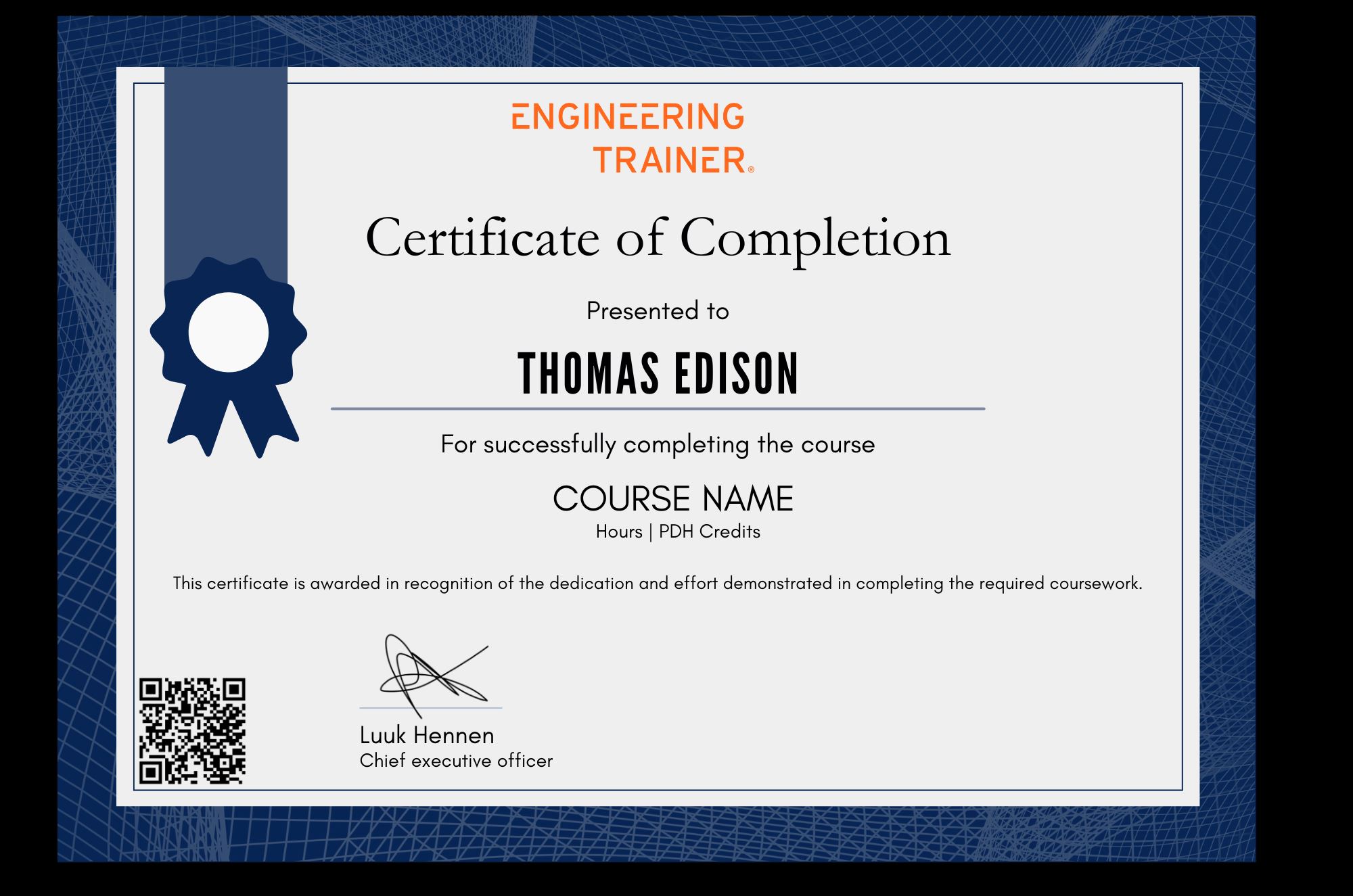
This Design by Analysis course explains how ASME BPVC Section VIII, Division 2, Part 5 uses FEA for pressure-vessel assessment. It covers plastic collapse, local failure, buckling, ratcheting, fatigue, stress categorization and stress linearization. This self-paced online course includes video lectures, knowledge-check quizzes, worked examples and a completion certificate with PDH credits.

What you'll learn
After completing this course, you...
• understand the General Definitions and Failure Mechanisms associated with ASME VIII-2 Part 5 (Design by Analysis),
• know the setup of ASME VIII-2 Part 5 and know were the relevant design rules can be found,
• can perform Stress Categorization as per ASME VIII-2 and are able to link results to failure mechanisms,
• have seen numerous practical examples with Shell and Brick Finite Element Models and know how to analyse the resulting stresses as per ASME VIII-2 Part 5,
• know the concepts of Stress Linearization and are able to apply them,
• understand the Fatigue Analysis approach in ASME VIII-2 Part 5 using both the Welded and Smooth Bar Methods.
-
 1-year access
-
 By Industry Experts
-
 100% Online Course
About the course
The ASME Boiler & Pressure Vessel section VIII code is the most frequently used pressure vessel design code in the world. Two design approaches are present in the code: design by rules and design by analysis. Design by Analysis in ASME BPVC Section VIII, Division 2, Part 5 describes the approach to be taken when using FEA in the design of a pressure vessel.
Are you doing FEA on a pressure vessel, then to conform to ASME VIII-2 you need to use ASME BPVC Section VIII, Division 2, Part 5. This learning path formed of 5 training courses explains how to conduct an FEA study (referred to as Design by Analysis) conform ASME BPVC Section VIII, Division 2, Part 5. The ASME BPVC Section VIII, Division 2, Part 5 compliance checks in plastic collapse, local failure, buckling, ratcheting and fatigue load cases are all detailed. Topics covered include the difference between primary or secondary stresses, the influence of weld type on fatigue life, linearization and how to obtaining the structural stresses from your FEA model.
The Course consists of 5 online, self-study Modules, all of which are formed of video lectures, with regular quizzes and exercises to reinforce your learning.
-
Self-Paced Course

-
3hr
-
3 PDH Credits

-
English

-
SPC141

Meet your instructor
Dynaflow Research Group
Dynaflow Research Group is an engineering consultancy working across piping design and analysis, flow dynamics, vibration, FRP piping, pressure equipment and specialist engineering software. Its experience includes EN and ASME design rules for piping and pressure vessels, buried piping, water hammer, pulsation, dynamic stress assessment, vibration measurement, FEA tools, BOSfluids, BOSpulse, PV Elite and NozzlePRO workflows.

Who should attend this course
• FEA analysts performing pressure-vessel Design by Analysis• Pressure-vessel engineers applying ASME Section VIII, Division 2, Part 5
• Mechanical engineers responsible for stress categorization or fatigue checks
• Static-equipment engineers reviewing Design by Analysis reports
• Technical reviewers assessing pressure-vessel FEA assumptions and results
Program & Details
-
Module 1 - Introduction to ASME VIII-2 Part 5

1. Introduction
2. Overview of ASME VIII-2 Part 5 ''Design by Analysis''
3. Pressure vessel failure modes evaluated in Part 5 -
Module 2 - Evaluating Plastic Collapse and Performing Stress Linearization
1. Introduction
2. What is Plastic Collapse
3. Elastic analysis method conform ASME VIII-2 Part 5
4. Limit load analysis conform ASME VIII-2 Part 5
5. Elastic-plastic analysis method conform ASME VIII-2 Part 5
6. Comparison of these three Plastic Collapse assessment methods
7. ASME VIII-2 stress linearization method for FEA results -
Module 3 - Ratcheting Failure Mode and Compliance Checks
1. What is ratcheting? An introduction
2. ASME VIII-2 Part 5 elastic analysis method for ratcheting failure
3. Simplified elastic/plastic analysis method
4. Elastic/plastic analysis method -
Module 4 - Fatigue Failure Mode and Compliance Checks
1. Fatigue failure and micro cracks
2. ASME VIII-2 screening criteria, when is a fatigue analysis needed?
3. Fatigue Assessment methods conform ASME VIII-2 Part 5
4. The steps in the Smooth bar method (Method A)
5. The steps in the Welded curve method (Method B) -
Module 5 - Buckling & Local Failure and Compliance Checks
1. Local failure compliance conform ASME VIII-2 Part 5
2. Evaluating buckling and the ASME VIII-2 compliance checks
Certification
Related courses



Why choose EngineeringTrainer
-
Learn at your Own Pace
-
Advance Technical Competences
-
Courses by Industry Authorities
Quick and simple overview of the different failure mode checks for FEA.
Engineer - Bilfinger
Request a Quote
Train Smarter. Grow Faster.
Build real-world skills that help you make better engineering decisions, reduce errors, and stand out in your field.