




Pressure Equipment Directive (PED 2014/68/EU) Awareness Training
-
 6hr
6hr
-
 Self paced
-
Trusted by professionals
-
Certification included
-
Industry standard content
Why take this course?
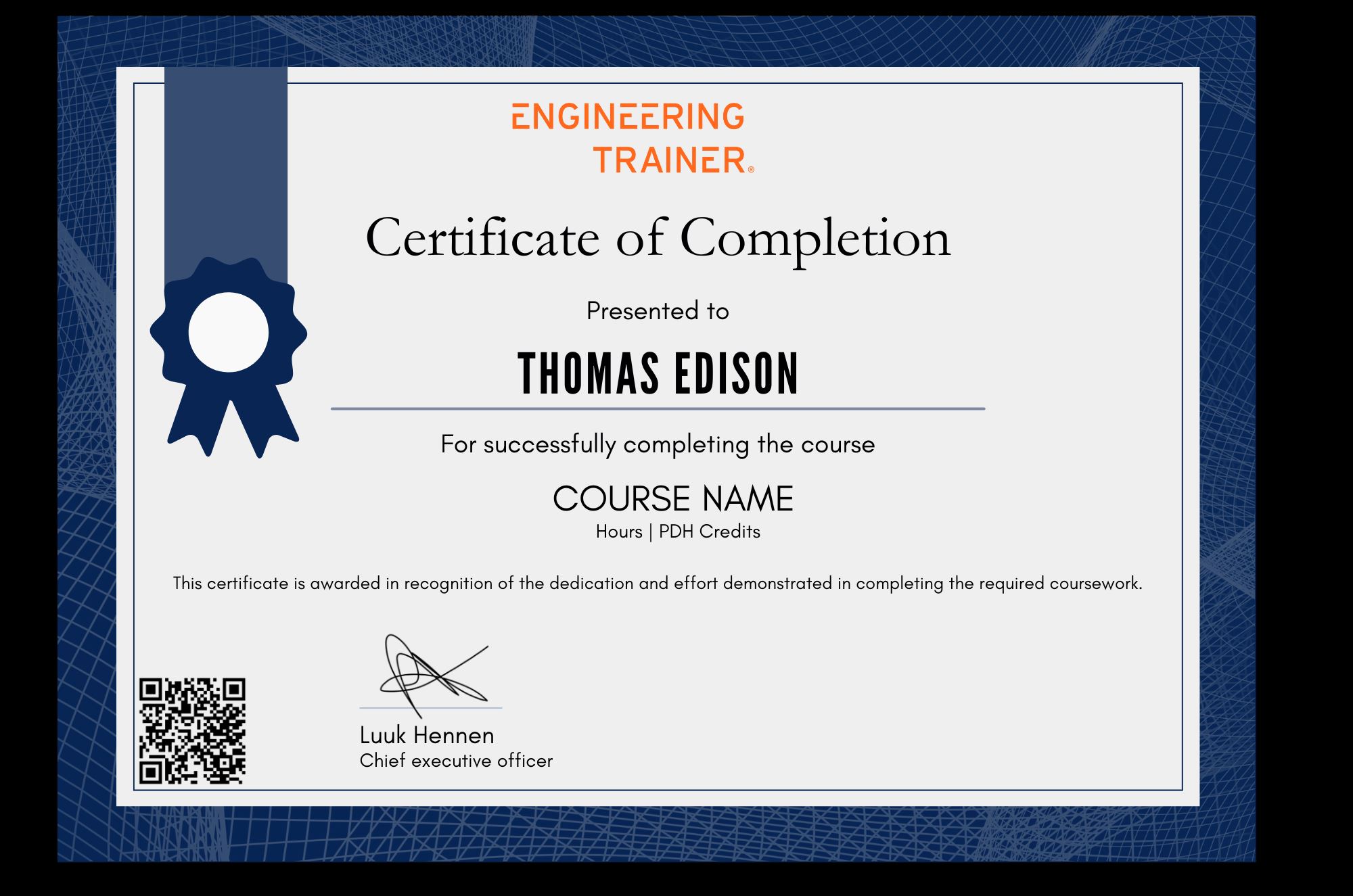
This PED 2014/68/EU course explains the legal and engineering workflow for pressure equipment placed on the EEA market. It covers scope, classification, conformity-assessment routes, essential safety requirements, technical documentation, CE marking and an applied blowdown-tank case. This self-paced online course includes video lectures, knowledge-check quizzes and a completion certificate with PDH credits.

What you'll learn
After completing this course, you...
• understand when the PED is applicable and how it relates to design codes,
• are aware of the processes and concepts of the PED,
• are able to use the PED and find the correct Conformity Assessment Procedure for your projects,
• know the concepts of the Essential Safety Requirements and understand terms like “Sound Engineering Practice”,
• will find it much easier to read the PED document when your project requires you to, thereby saving valuable time.
-
 1-year access
-
 By Industry Experts
-
 100% Online Course
About the course
The Pressure Equipment Directive (PED) provides a set of rules and processes relevant to the design, manufacturing and trade of pressurized equipment used within the European Economic Area (EEA). This directive is implemented within the law of the EEA member states rendering them lawful requirements.
This course teaches you the concepts of the PED and the steps involved with performing a project accordingly. By means of a set of lectures and real-life cases you will learn the rules, scope, and limitations of the directive. Topics include Essential Safety Requirements, classification of equipment, CE-marking, the EU declaration of conformity, the role of Notified Bodies (NoBo) and the relation to industrial design codes (harmonized vs. non-harmonized).
-
Self-Paced Course

-
6hr
-
6 PDH Credits

-
English

-
SPC030

Meet your instructor
Geert Peeks
Geert Peeks is a pressure-vessel design specialist and retired department head at NEM Industrial & Utility Boilers. His experience covers pressure equipment, the scope and classification rules of PED 2014/68/EU, conformity assessment, technical documentation and pressure-equipment project practice.


Who should attend this course
• Pressure-equipment engineers working under PED 2014/68/EU• Mechanical design engineers responsible for pressurized equipment
• Fabrication engineers producing pressure equipment for the EEA
• Quality and conformity personnel preparing PED documentation
• Technical procurement specialists buying pressure equipment for EEA projects
• Plant engineers responsible for pressure-equipment compliance
• Technical compliance specialists working for pressure-equipment importers or distributors
Program & Details
-
Module 1 - Getting Started with PED

1. Welcome to the course
2. What is the PED?
3. Purpose of the PED
4. Download our PED Table of Contents
5. Download the PED Guidelines -
Module 2 - PED Context
1. Products in the PED scope
2. Excluded Products
3. Processes within the PED scope
4. Countries for which the PED is relevant
5. History of the PED
6. The PED in relation to other directives
7. The PED in relation to design standards -
Module 3 - PED Workflow
1. Step 1: Scope Yes/No
2. Case: Feedwater Line Introduction
3. Case: Scope: Yes / No?
4. Step 2: Select Medium Group
5. Step 3: The Equipment Type
6. Step 4: Determine equipment risk category
7. Case1: Which Equipment risk Category?
8. Step 5: Select Conformity Assessment Procedures (CAP)
9. Case: the relevant CAP
10. Sound Engineering Practice (SEP)
11. The Essential Safety Requirements (ESR)
12. ESR: Hydrotest Requirements
13. Case: Hydrotest
14. ESR: Material Requirements
15. ESR: Risk assessment -
Module 4 - Documentation & CE Marking
1. Documentation according the PED
2. The Declaration of Conformity
3. CE Marking your equipment
4. Harmonized vs. Non-harmonized
5. Case: Documentation, DoC & CE marking
6. PED Checklist
7. Consequences of Brexit -
Module 5 - Case: Blowdown Tank
1. Introduction
2. Scope Yes/No
3. PED Risk Category
4. Conformity Assessment and NoBo
5. Non harmonized materials
6. Non destructive examinations
7. Welder requirements
8. Technical documentation
9. Name plate
10. Declaration of Conformity (DoC)
11. Closing remarks
Certification
Related courses




Why choose EngineeringTrainer
-
Unlimited Team-wide Access
-
Advance Technical Competences
-
Courses by Industry Authorities
A very relevant course, with clear information and examples and high content of information. It will be a great support in my daily tasks as a Quality controller.
Quality Control Engineer, Advansor
Request a Quote
Train Smarter. Grow Faster.
Build real-world skills that help you make better engineering decisions, reduce errors, and stand out in your field.