




Workshop: Pressure Testing Piping After Repairs or Modifications: Pitfalls & Opportunities
-
 Thursday 26 Nov 2026
(3-5pm CET)
Thursday 26 Nov 2026
(3-5pm CET)
-
 2 Hour Session
-
Interactive Q&A
-
Trusted by Professionals
-
Certification Included
Why take this course?
Pressure testing existing piping after a repair or modification requires different considerations from testing a newly built system. In this live workshop, Dr. Shervin Maleki uses real case studies from the chemical industry to explain typical and potentially costly pressure-testing pitfalls, and provides essential insights for maintenance, inspection and integrity engineers involved with pressure testing existing systems.
What you'll learn
After this live Workshop you,
-understand why pressure testing an existing piping system after a repair or modification requires a different approach from pressure testing new construction;
-understand how the purpose of a pressure test influences the testing strategy;
-are aware of when a pressure test may be required and of relevant alternatives that may be considered;
-understand how ASME B31.3, API 570, ASME PCC-2 and API 579-1/ASME FFS-1 fit within the decision-making context for existing piping;
-understand how to evaluate an appropriate test pressure instead of automatically reverting to familiar new-construction testing practices;
-understand how the selected test scope can affect temporary support requirements, filling, draining, cleaning and the time required to return a system to service;
-understand the considerations involved in selecting a suitable test medium and testing method, including hydrostatic and pneumatic testing;
-have seen how contamination, residual water and product-purity requirements can influence the testing strategy;
-have worked through real-life scenarios and a practical example with the instructor to strengthen your engineering judgement when planning pressure testing after piping repairs and modifications.
-
 Thursday 26 Nov 2026
(3-5pm CET)
Thursday 26 Nov 2026
(3-5pm CET)
-
 Instructor-Led 2hr Duration
-
 Online Live Session
About the course
Pressure testing is often treated as a familiar final step following a piping repair or modification. In an existing chemical installation, however, simply falling back on new-construction testing practices can result in significantly more work and costs than necessary. Larger test scopes, filling of piping systems with water, temporary support requirements, drying and cleaning can all affect the time required to safely return a system to operation.
The correct starting point is therefore not simply: “At what pressure should we test?” It is first necessary to understand why the test is being performed and what it needs to demonstrate. Depending on the situation, this may include demonstrating the structural integrity of a repair, leak tightness, workmanship or the integrity of a wider pressure boundary. Engineers should also understand whether pressure testing is required in the first place and which alternatives may be available.
During this 2-hour instructor-led workshop, Shervin Maleki will use multiple scenarios from existing process piping systems to develop this decision-making context. Relevant requirements and guidance from ASME B31.3, API 570, ASME PCC-2 and API 579-1/ASME FFS-1 will be discussed as part of the broader engineering approach.
Attention will be given to selecting an appropriate test pressure, determining the necessary test scope and choosing between hydrostatic, pneumatic and other permissible testing approaches. Practical considerations such as isolation, temporary supporting of water-filled piping, drying, contamination, product purity and production downtime will be discussed.
A real chemical-industry case and worked example will demonstrate how different testing decisions can significantly affect the associated costs and required work before a piping system can safely be returned to service. Throughout the session, participants will be encouraged to discuss the scenarios and engineering choices directly with the instructor.
-
Live Workshop

-
Thursday 26 Nov 2026 (3-5pm CET)
-
2 PDH Credits

-
English

-
MAS4512

Meet your instructor
Shervin Maleki, PhD, MBA
Structural Integrity Assessment, Mechanical Behaviour Analysis


Who should attend this course
Mechanical, Maintenance, Inspection, Integrity and Reliability Engineers involved with existing process piping systems, particularly those working for asset owners and operators in the chemical and process industries.The workshop is also relevant to Piping Engineers and other engineering professionals involved in planning, reviewing or approving piping repairs and modifications and determining the requirements for returning systems safely to service.
Prerequisites
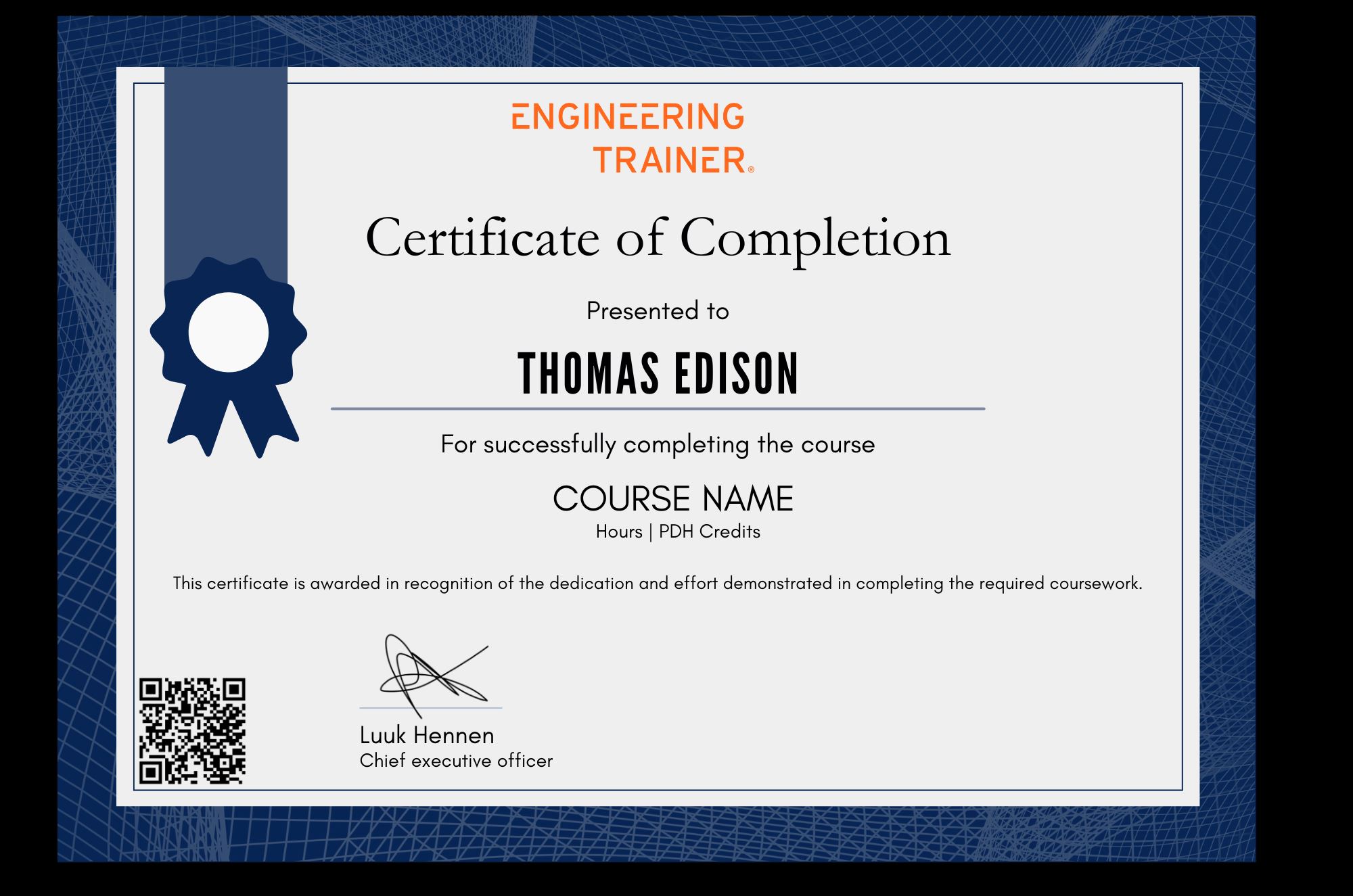
Participants should have a general working knowledge of industrial process piping and pressure systems. Familiarity with common piping pressure terminology and the basic principles of pressure testing is assumed.Certification
Related courses

Why choose EngineeringTrainer
-
Live Interaction with Experts
-
Advance Technical Competences
-
Courses by Industry Authorities
Since using EngineeringTrainer our internal mentorship has a much more matured character.
Logan Chapman - COO at Chapman Consulting Inc.
Request a Quote
Train Smarter. Grow Faster.
Build real-world skills that help you make better engineering decisions, reduce errors, and stand out in your field.