


Actuated Valves: Accessories & Hardware
-
 7hr
-
 Self paced
-
Trusted by professionals
-
Certification included
-
Industry standard content
Why take this course?
This actuated-valve hardware course examines valve bodies, trim, bonnets, positioners, solenoid valves, speed controls and diagnostic functions. It explains how these choices affect specification, reliability, testing and maintenance. This self-paced online course includes video lectures and a completion certificate with PDH credits.

What you'll learn
After completing this course, you...
• are familiar with the design choices in valve body design and how these are determined by piping classes,
• have seen how to design to minimize internal leakage and fugitive emissions,
• understand the design details of valve trims for different flow capacities, their characteristics and suitability for different applications,
• can recognise a trim design with stem retention,
• know the different packing systems available on the market,
• understand the methods for valve speed control, why it is done and the associated difficulties,
• have learnt the working principle of a valve positioner, and how a positioner is used to remove the deadband,
• seen the function of a regulator, stem retention design and the different configurations of solenoid-operated control valves,
• have become familiar with the purpose and methods of valve diagnostics and asset management.
-
 1-year access
-
 By Industry Experts
-
 100% Online Course
About the course
Actuated Valves are found throughout the industry. In this Self-Paced training course, participants will be taken through the hardware and accessories for actuated valves in detail. Firstly, the choices to be made in valve body design will be explained, and the role that piping classes play in determining many of these aspects will be shown. The valve trim is then explained, and it will be shown how its design influences the flow capacity, valve characteristics, and suitability for different applications.
Valve speed control and the associated difficulties will be shown. The working principle of a valve positioner will be detailed to show how a positioner is used to remove the deadband. Learn about the function of a regulator, stem retention design, and the different configurations of solenoid-operated control valves. To close the course, the methods of valve diagnostics and asset management will be shown.
-
Self-Paced Course

-
7hr
-
7 PDH Credit

-
English

-
SPC4102

Meet your instructor
Frans Martens
Frans Martens is a control and automation engineer with 35 years of experience at Shell across upstream oil and gas, LNG, chemicals and refining. As a Principal Control and Automation Engineer, he was the technical focal point for control valves, actuators and field instruments, including vendor selection and acceptance testing, and authored Shell engineering standards.


Who should attend this course
• Instrumentation engineers who specify actuated-valve accessories• Control engineers responsible for valve actuation and diagnostics
• Maintenance engineers responsible for valve performance
• Reliability engineers who review valve diagnostics and failure behavior
• Mechanical engineers who review valve-body, trim and bonnet choices
• Piping engineers who review valve and piping-class compatibility
• Project and vendor engineers who review positioners, solenoid valves, speed controls and partial-stroke testing
Program & Details
-
Module 1 - The Valve Body

1. Material Selection
2. End connections and piping classes
3. Gaskets
4. Thermal insulation
5.Important choices to be made -
Module 2 - Valve Trim
1. Flow capacity
2. Internal leakage
3. Inherent characteristic
4. Flowing direction
5. Stem retention
6. Trim design
7. Trim materials
8. Trim damage -
Module 3 - Valve Bonnet
1. Fugitive emissions controls
2. Packing systems
3. Extension bonnets -
Module 4 - Valve and Actuator Accessories
1. Position indication
2. Pneumatic accessories
3. Solenoid-operated valve
4. Speed control
5. Lock-up valves
6. Fittings and tubing -
Module 5 - Valve Positioner and Diagnostics
1. Dealing with friction
2. Signal types
3. Working principle
4. Interfaces
5. Dynamic response
6. Diagnostics
7. Asset management
8. Partial stroke testing
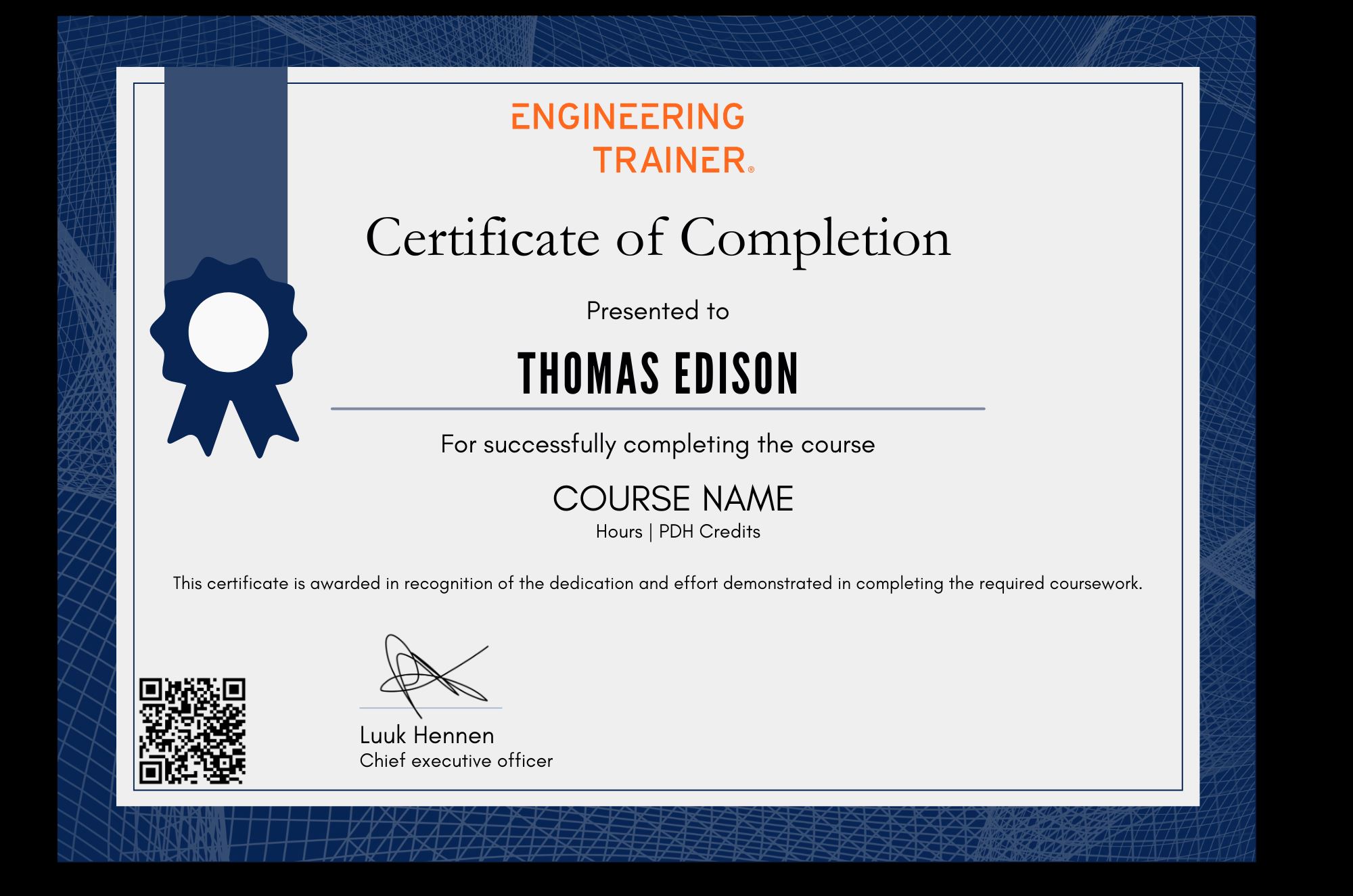
Certification
Related courses

Why choose EngineeringTrainer
-
Unlimited Team-wide Access
-
Advance Technical Competences
-
Courses by Industry Authorities
Since using EngineeringTrainer our internal mentorship has a much more matured character.
Logan Chapman - COO at Chapman Consulting Inc.
Request a Quote
Train Smarter. Grow Faster.
Build real-world skills that help you make better engineering decisions, reduce errors, and stand out in your field.