


Introduction to Valves
-
 4hr 30min
-
 Self paced
-
Trusted by professionals
-
Certification included
-
Industry standard content
Why take this course?
This industrial valve course explains how common valves are built, actuated and selected. It compares linear and rotary designs, component functions, actuator types, pressure drop, response time and the operating characteristics of the principal valve families. This self-paced online course includes video lectures, and a completion certificate with PDH credits.

What you'll learn
After completing this course, you...
• can identify the main components of an industrial valve
• can distinguish common linear-motion and rotary-motion valve types
• understand how manual, electric, pneumatic, hydraulic and self-actuated valve actuators work
• can compare the operating characteristics, advantages and limits of common valve designs
• can select a suitable valve type for a defined service after checking the application requirements
-
 1-year access
-
 By Industry Experts
-
 100% Online Course
About the course
Valves are used in every engineering industry on the planet. When you wash your hands, you open a valve. When you shower, you open a valve. Valves are required any time you want to start, stop, or control flow within a system. But have you ever wondered...
Why do we need so many different valve types?
What kind of valve is correct for x,y,z application?
What are the pros and cons of each valve type?
How exactly do different valves function?
This engineering course will help you answer all these questions and many more!
The course is designed to take you from zero to hero concerning valve knowledge. Even if you already have some background knowledge, this course will serve as an efficient refresher. Whatever your level of understanding, or engineering background (oil & gas, mechanical engineering, HVAC, chemical engineering, power engineering, etc.), this course will provide you with a strong understanding of different valve types and their details.
-
Self-Paced Course

-
4hr 30min
-
4.5 PDH Credits

-
English

-
SPC701

Meet your instructor
saVRee
saVRee is an engineering-training company that uses interactive 3D models, video lessons and technical reference material to explain industrial equipment and processes. Since 2017, its material has covered valves, pumps, bearings, heat exchangers, boilers and power-generation machinery for technical learners and industrial teams.
Who should attend this course
• Piping designers selecting or arranging industrial valves• Pipe stress engineers who need to understand valve construction and loads
• Mechanical engineers who need a foundation in industrial valves
• Process engineers involved in valve selection
• Maintenance engineers responsible for valve condition or repair
• Operations personnel who operate valve-equipped systems
• Valve application engineers at the start of their role
Program & Details
-
Introduction to Valves

1. Short Introduction to Valves
2. How Do Valves Get Their Names
3. Introduction to Valve Types
4. Purpose of a Valve and Construction
5. Rotary and Linear Motion Valves
6. Valve Construction and Components
7. Pressure Drop
8. Response Time
9. Length of Travel -
Valve Types
1. Ball
2. Butterfly
3. Diaphragm
4. Gate
5. Globe
6. Pinch
7. Plug -
Valve Components
1. Body
2. Bonnet
3. Trim
4. Disc and Seat
5. Stem
6. Actuator
7. Packing
8. Valve Functions and Basic Parts Summary -
Valve Actuators
1. Introduction to Valve Actuators
2. Valve Actuator
3. Manual, Fixed, and Hammer Actuators
4. Handwheels Fixed to Stem
5. Hammer Handwheel
6. Gears
7. Electric Motor Actuators
8. Pneumatic Actuators
9. Hydraulic Actuators
10. Self - Actuated Valves
11. Solenoid Actuated Valves
12. Speed of Power Actuators
13. Valve Position Indication
14. Valve Actuators Summary -
Valve Types
1. Gate Valves
2. Gate Valve Disk Design
3. Solid Wedge
4. Flexible Wedge
5. Split Wedge
6. Parallel Wedge
7. Gate Valve Stem Design
8. Gate Valve Seat Design -
Globe Valve
1. Globe Valves
2. Globe Valve Body Designs
3. Z-Body Design
4. Y-Body Design
5. Angle Valve Design
6. Globe Valve Discs
7. Ball Disc
8. Composition Disc
9. Plug Disc
10. Globe Valve Disc and Stem Connections
11. Globe Valve Seats
12. Globe Valve Direction of Flow -
Ball Valve
1. Ball Valves
2. Ball Valve Advantages
3. Ball Valve Disadvantages
4. Ball Valve Port Patterns
5. Ball Valve Materials
6. Ball Valve Stem Design
7. Ball Valve Bonnet Design
8. Ball Valve Position -
Plug Valve
1. Plug Valves
2. Plug Ports
3. Multiport Plug Valves
4. Plug Valve Disks
5. Diamond Port Plug
6. Lubricated Plug Valve Design
7. Non-Lubricated Plugs
8. Manually Operated Plug Valve Installation
9. Plug Valve Glands -
Diaphragm Valve
1. Diaphragm Valves
2. Diaphragm Construction
3. Diaphragm Valve Stem Assemblies
4. Diaphragm Valve Bonnet Assemblies -
Reducing Valve
1. Reducing Valves
-
Pinch Valve
1. Pinch Valves
2. Pinch Valve Bodies -
Butterfly Valve
1. Butterfly Valves
2. Butterfly Valve Seat Construction
3. Butterfly Valve Body Construction
4. Butterfly Valve Disk and Stem Assemblies -
Needle Valve
1. Needle Valves
2. Needle Valve Applications
3. Needle Valve Body Designs -
Check Valve
1. Check Valves
2. Swing Check Valves -
Relief and Safety
1. Relief and Safety Valves
2. Pilot - Operated Relief Valves
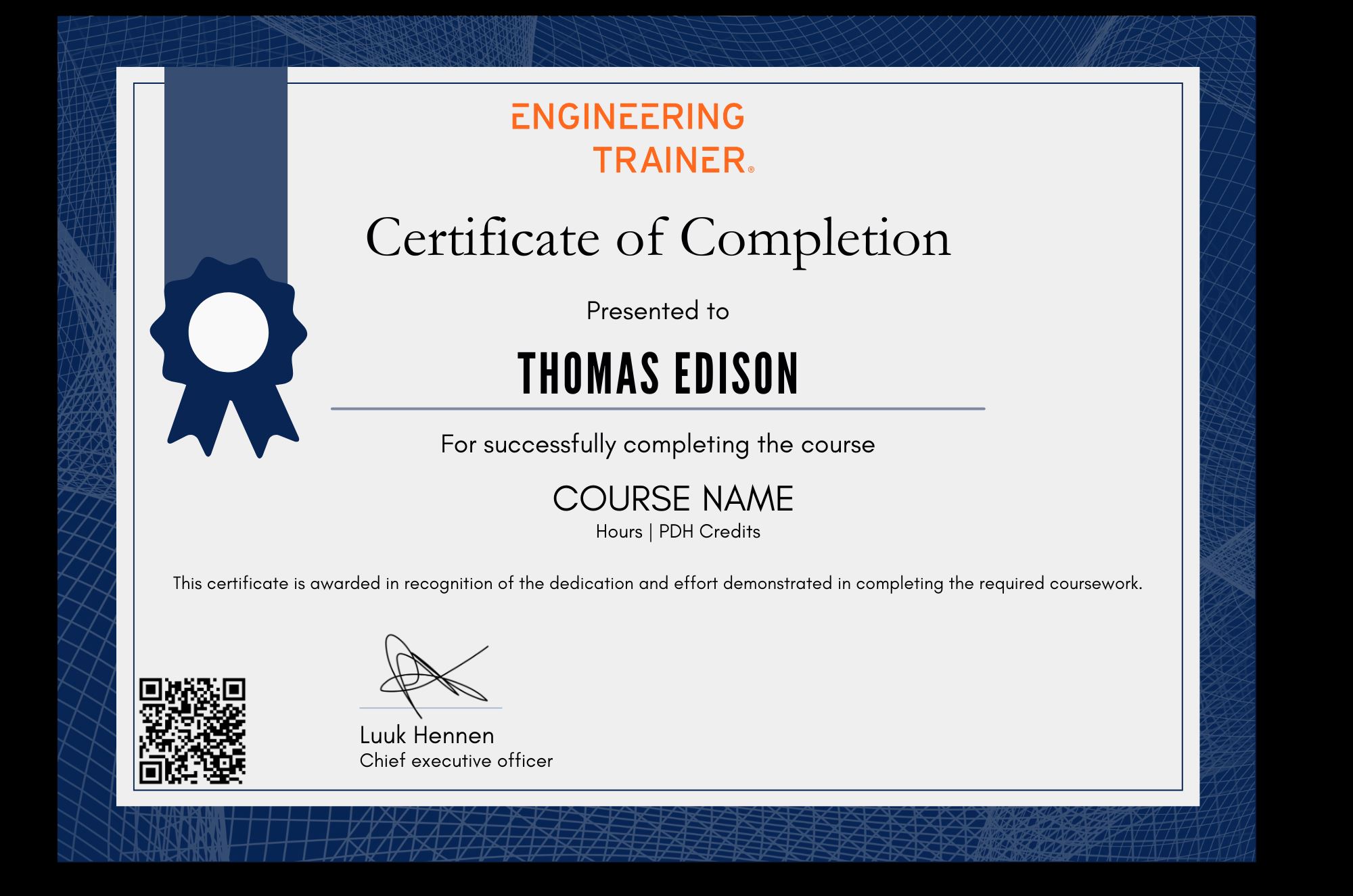
Certification
Related courses

Why choose EngineeringTrainer
-
Unlimited Team-wide Access
-
Advance Technical Competences
-
Courses by Industry Authorities
Since using EngineeringTrainer our internal mentorship has a much more matured character.
Logan Chapman - COO at Chapman Consulting Inc.
Request a Quote
Train Smarter. Grow Faster.
Build real-world skills that help you make better engineering decisions, reduce errors, and stand out in your field.