




Slug Flow and Cavitation
-
 45min
45min
-
 Self paced
-
Trusted by professionals
-
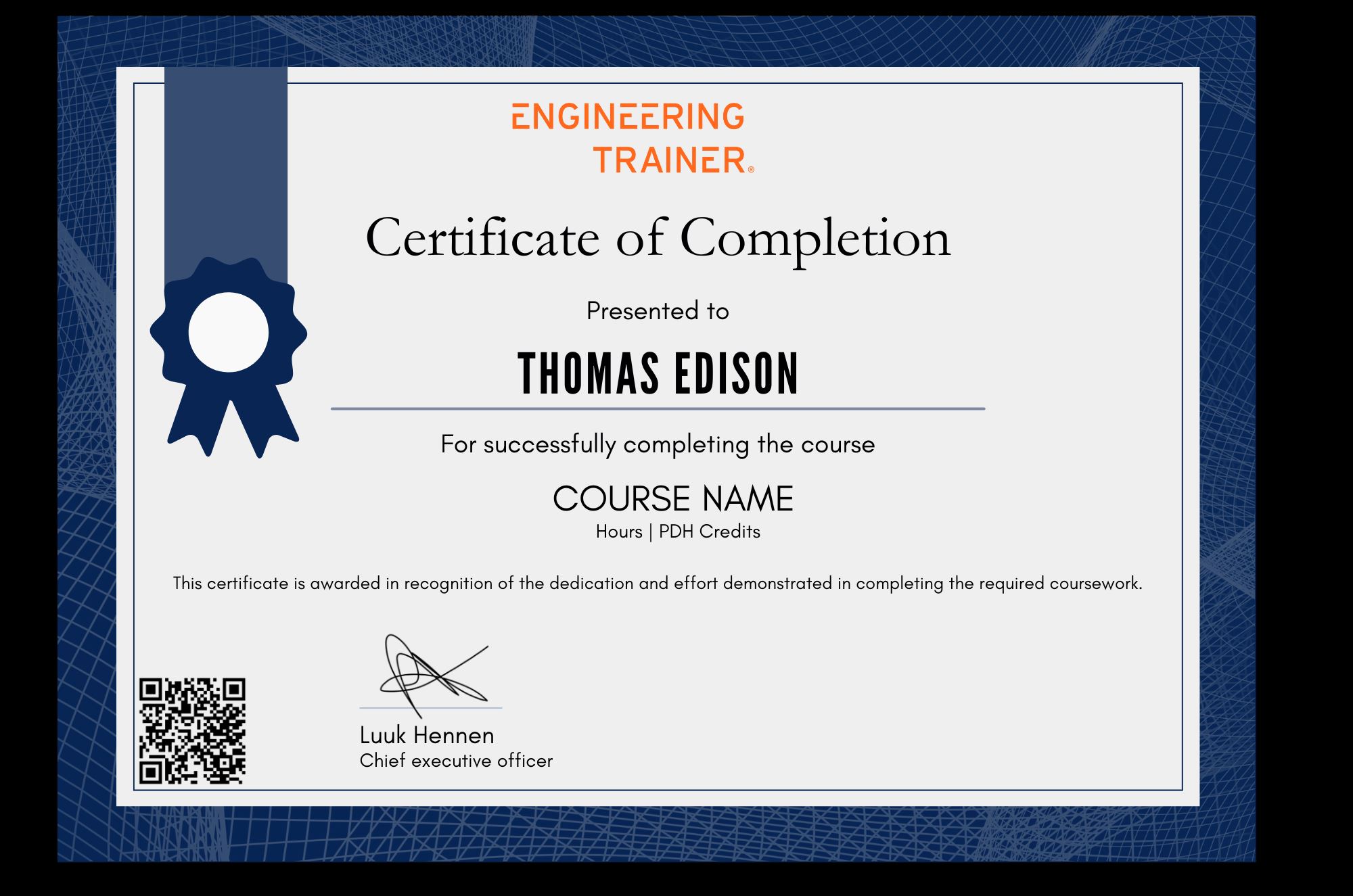
Certification included
-
Industry standard content
Why take this course?
Understand and mitigate slug flow and cavitation in piping systems. This self-paced course details mechanisms, susceptibility analysis (Cavitation Number), two-phase flow regimes, slug flow analysis, and the Dynamic Load Factor. Includes video lectures, quizzes, and a certificate with PDH credits.
-
 Unlimited Access with Membership
-
 By Industry Experts
-
 100% Online Course
About the course
Working on piping systems? Learn about the cause, analysis, and mitigation of Slug Flow and Cavitation. In this Self-Paced course, participants will be taken through: the mechanism of cavitation and flashing, how to determine if a system is susceptible to cavitation or flashing (Cavitation Number),the flow regimes in a two-phase flow, what is slug-flow, analysis of slug flow on a piping system, Dynamic Load Factor.
-
45min
-
1 PDH Credit

-
English

-
SPC010M4

Meet your instructor
Dynaflow Research Group
Dynaflow Research Group is an engineering consultancy working across piping design and analysis, flow dynamics, vibration, FRP piping, pressure equipment and specialist engineering software. Its experience includes EN and ASME design rules for piping and pressure vessels, buried piping, water hammer, pulsation, dynamic stress assessment, vibration measurement, FEA tools, BOSfluids, BOSpulse, PV Elite and NozzlePRO workflows.
Who should attend this course
• Those working on piping systems with two-phase flow where slug flow could occur.• Those wanting to understand the mechanism and mitigation measures for cavitation and flashing.
Program & Details
-
Slug Flow and Cavitation

1. Course Introduction
2. Cavitation Basics & Flashing
3. Cavitation Advanced & Flashing
4. Slug Flow: Basics
5. Slug Flow: Advanced Considerations
6. AIV & FIV Example
7. Course Outro
Certification
Related courses


Why choose EngineeringTrainer
-
Unlimited Team-wide Access
-
Advance Technical Competences
-
Courses by Industry Authorities
Since using EngineeringTrainer our internal mentorship has a much more matured character.
Logan Chapman - COO at Chapman Consulting Inc.
Request a Quote
Train Smarter. Grow Faster.
Build real-world skills that help you make better engineering decisions, reduce errors, and stand out in your field.