


Pipe Supporting: a Practical Guide
-
 1hr 30min
-
 Self paced
-
Trusted by professionals
-
Certification included
-
Industry standard content
Why take this course?
This course on pipe supporting course explains how supports carry weight, control movement, limit nozzle loads and respond to thermal or occasional loads. It covers practical support types, design guidance, field examples and a decision matrix for selecting which type. This self-paced online course includes video lectures, knowledge-check quizzes, worked examples and a completion certificate with PDH credits.

What you'll learn
After completing this course, you...
• have seen all the support types typically used in piping systems,
• are able to understand the different pipe supporting solutions; being able to explain their characteristics and typical applications,
• are familiar with the structural, operational, and maintenance considerations relevant to pipe supporting,
• can identify support requirements for a specific piping system,
• can use guidelines to design appropriate supporting for piping systems.
-
 1-year access
-
 By Industry Experts
-
 100% Online Course
About the course
Pipes are supported on a variety of different types of supports, from springs and rods to those with pipe shoes or lying directly on the supporting structure. Next to supporting the weight of the pipe, pipe supports also have functions such as limiting nozzle loads, allowing thermal expansion, and absorbing a blast load. Often many supports can theoretically accommodate the same loads, but which of these is preferred when the practical aspects of maintenance, installation, and operation come into play?
In this course the instructor will first take the participant through the different types of pipe supports; how they are typically constructed, and how restraining functions in different directions such as a guide or stop function can be made. The attention then moves on to explain support philosophies for different types of piping systems and the maintenance aspects that designers should consider.
This course contains video content together with quizzes to reinforce the learning outcomes. Within an exercise, participants have the chance to compare pipe supporting choices and then see the solution explained by the instructor.
-
Self-Paced Course

-
1hr 30min
-
1.5 PDH Credits

-
English

-
SPC2102

Meet your instructor
Mike Lureman
Mike Lureman is a retired senior mechanical engineer with experience in plant layout and pipe-support design. His work covers site and plot-plan decisions, equipment arrangement, constructability, maintenance access and practical support selection.

Who should attend this course
• Piping designers selecting practical support arrangements• Junior pipe stress engineers starting support design
• Mechanical engineers responsible for piping supports
• Pipe-support designers developing support details
• Maintenance engineers reviewing support accessibility or condition
Program & Details
-
Module 1 - Pipe Support Essentials

1. The need for Pipe Supports
2. Support for Weight (vertical loading)
3. Horizontal Loading
4. Restraining Upwards Motion
5. Axial Loading
6. Supporting Vertical piping
7. Hangers
8. U-bolts -
Module 2 - Design Guidelines & Best Practices
1. Symbols for Pipe Supports
2. Supports are part of a System
3. Sleepers
4. Pipe Racks
5. Expansion Loops
6. Supporting on a Vessel -
Module 3 - Pipe Supports in Practice
1. Friction
2. Corrosion and Wear
3. Pipe Saddles and Reinforcing Pads
4. Small Bore Piping
5. Insulated Pipe
6. High Temperature Piping -
Module 4 - Decision Matrix
1. Overview of when to use which support?
-
Module 5 - Quiz and Assignment
1. Multiple choice quiz
2. Exercise where participants evaluate pipe supporting options
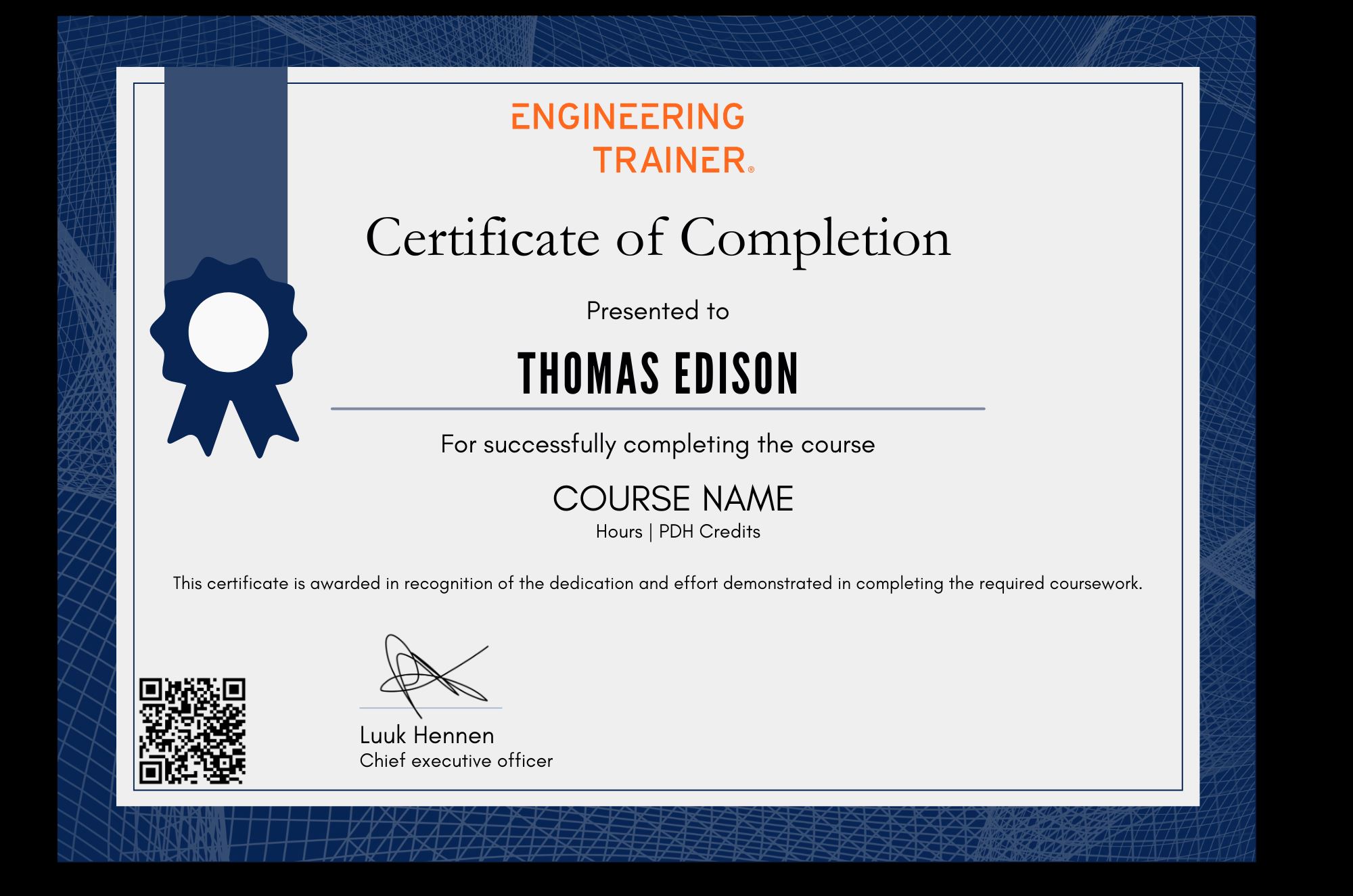
Certification
Related courses


Why choose EngineeringTrainer
-
Unlimited Team-wide Access
-
Advance Technical Competences
-
Courses by Industry Authorities
Since using EngineeringTrainer our internal mentorship has a much more matured character.
Logan Chapman - COO at Chapman Consulting Inc.
Request a Quote
Train Smarter. Grow Faster.
Build real-world skills that help you make better engineering decisions, reduce errors, and stand out in your field.